
How Starbucks Turned Coffee Runs into a High-Engagement Loyalty Game
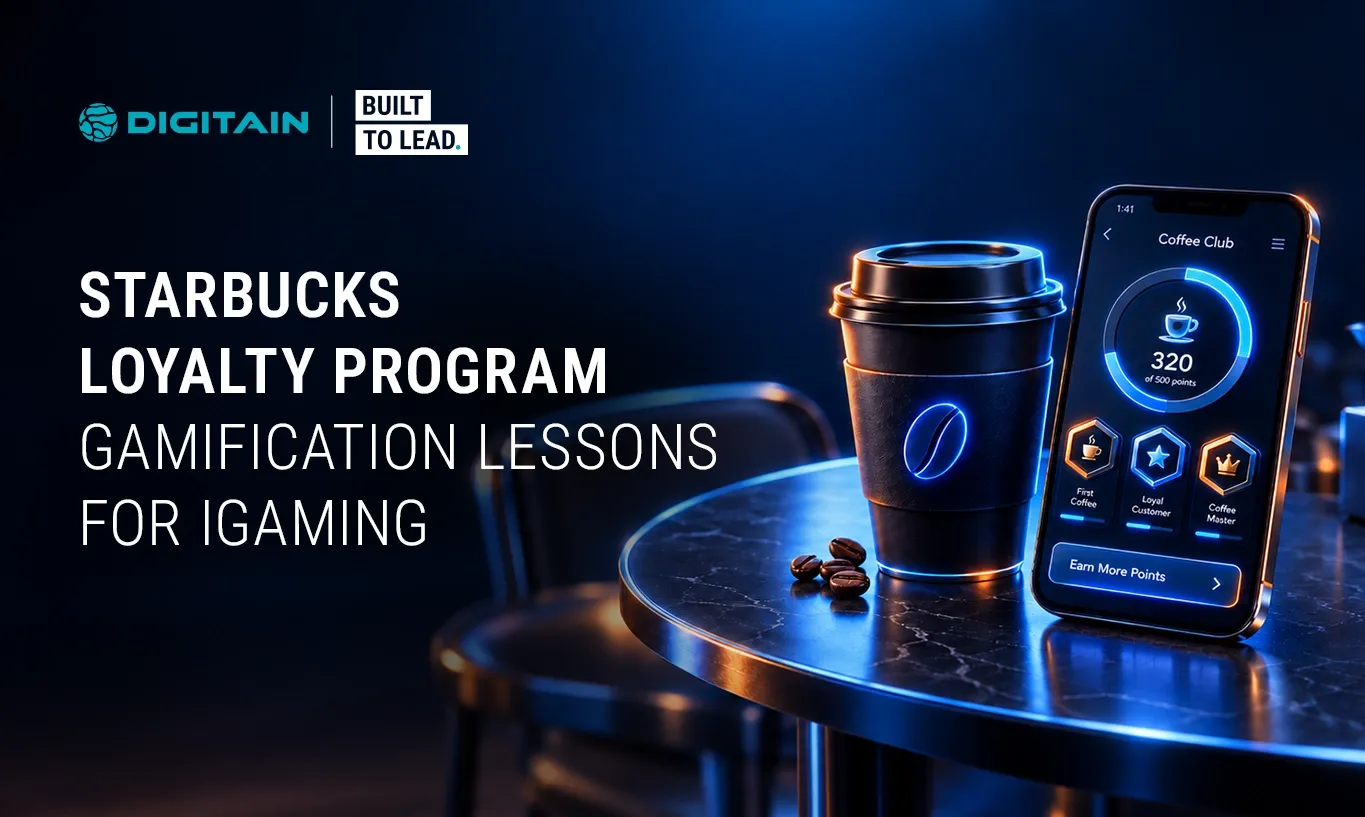
One would think that the only valid loyalty programmes to research for an iGaming operator should belong to a sportsbook or a casino. However, sometimes looking outside the industry may yield interesting results. In this case, we are discussing a coffee company.
The Starbucks loyalty program has turned an everyday purchase into a visible progression system built around Stars, status, personalised benefits and time-limited rewards. In March 2026, Starbucks redesigned the programme around three membership levels: Green, Gold and Reserve. This creates clearer progression and differentiated benefits as engagement increases.
We are not suggesting that you copy a coffee loyalty programme feature by feature, especially in an industry as diverse as iGaming. You could, however, understand why its mechanics work, and how you can apply similar principles responsibly to player retention, personalisation, and lifecycle management.
Why iGaming Operators Should Study Starbucks
Good retention marketing gives customers a reason to return. Better retention does the same thing, but without making every interaction feel like another acquisition campaign.
Starbucks has built that principle into the customer journey. A purchase goes beyond just completing a transaction. it earns Stars, contributes towards status and can unlock another benefit. Progress remains visible between visits.
The scale makes the case particularly relevant. Starbucks reported 35.5 million 90-day active Rewards members in the US in Q1 FY2026. The company also said Rewards members generated nearly 60% of US company-operated revenue during fiscal 2025, representing more than $13 billion in spend.
The way Starbucks has positioned the redesigned programme increases frequency and transactions. It does that through greater personalisation and stronger incentives to progress between levels.
For iGaming businesses, that creates an interesting case study in how loyalty program gamification can turn isolated transactions into a longer lifecycle.
How the Starbucks Loyalty Program Works
Stars as a Program Currency
Stars give the Starbucks Rewards program a simple internal currency. Under the programme introduced on 10 March 2026, Green members earn 1 Star per US dollar spent, Gold members earn 1.2 Stars and Reserve members earn 1.7 Stars.
This gives the customer an immediate reward signal. At the same time, it creates a second layer of value around future benefits.
The principle matters for gamification in loyalty programs: a loyalty currency makes progress measurable. Instead of asking customers to wait for an abstract future benefit, the programme continuously shows them that an action has moved them closer to something.
Earning and Redeeming Rewards
Starbucks offers several redemption thresholds. Under the March 2026 programme, for example, 25 Stars can cover an eligible beverage customisation, while the new 60-Star tier provides $2 off a purchase. Higher thresholds can unlock eligible drinks, food or merchandise.
The current Starbucks Rewards Terms of Use set out the applicable earning, redemption and expiration rules.
This creates an important loyalty dynamic: customers do not have to wait until the distant end of the programme to experience value. Smaller rewards can appear along the way.
Starbucks Status Levels
The redesigned programme introduced three Starbucks status levels: Green, Gold and Reserve. Green is the entry level. Members reaching 500 Stars within 12 months qualify for Gold, while 2,500 Stars are required to reach Reserve. Starbucks also differentiates earning rates and benefits between the levels.
Gold members, for example, receive at least four additional Double Star Days annually, while Reserve members receive at least six. Gold and Reserve Stars do not expire while the relevant status is maintained.
You can find the current programme details in the official Starbucks Rewards overview.
The mechanic is straightforward:
· Progress becomes visible.
· Status has value.
· Increased engagement opens additional benefits.
The App, Stored Value and Mobile Order and Pay
Digital integration reduces the distance between loyalty and the transaction itself. Customers can track their progress and available rewards digitally. At the same time, Starbucks uses its broader digital ecosystem to connect ordering, payment, offers and loyalty.
That matters a lot. Even if you have the best gamified loyalty program, it will be less effective if the customer has to actively search for it. Loyalty works best when progress is embedded into the core experience.
For an iGaming operator, the equivalent principle is integration: loyalty should connect to the player account, CRM, bonus infrastructure, and relevant products rather than operate as a disconnected promotion.
The Game Mechanics Behind Starbucks Rewards
Progress Bars and Visible Goals
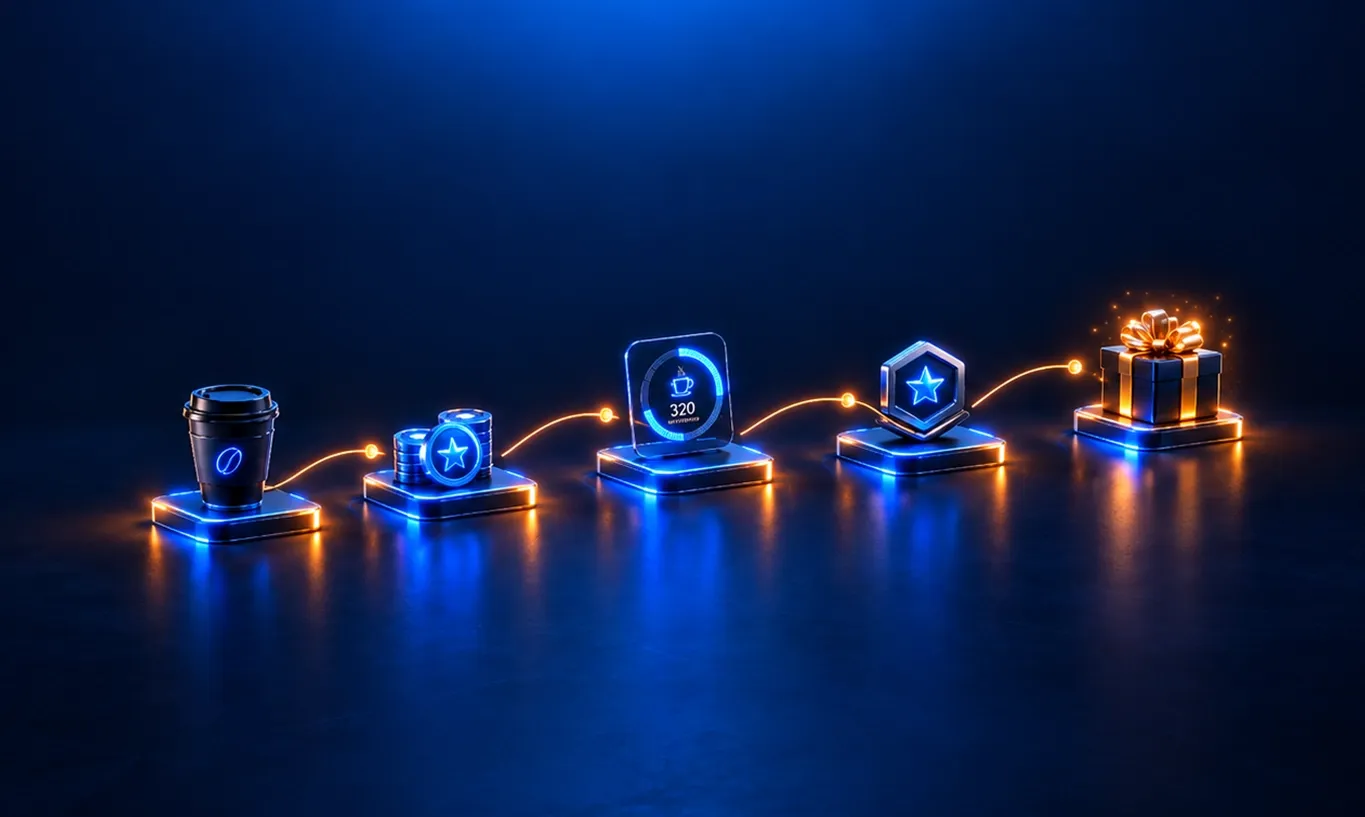
Progress is powerful because it answers a basic question: how close am I? In the case for Starbucks, members can track progress towards the next status level digitally. That turns an otherwise invisible history of transactions into a visible journey.
In iGaming, an equivalent mechanic might show progress through a loyalty level or an eligible mission. The objective should be transparent, the reward understandable and the mechanic appropriate to the player and jurisdiction.
Starbucks Double Star Days and Time-Limited Bonuses
A Starbucks Double Star Day adds urgency without redesigning the underlying loyalty programme. The normal earning loop remains intact, but selected periods provide greater value.
The iGaming equivalent might be a compliant time-limited mission, tournament or eligible promotional mechanic.
The important principle is relevance. A limited-time mechanic should have a defined purpose such as reactivation or engagement with an eligible product. You should measure whether it produces incremental value rather than activity that would have happened anyway.
Personalised Challenges and Missions
Starbucks continues to provide personalised Bonus Star offers and access to challenges through its digital experience. This moves the model beyond one-size-fits-all loyalty. Different users can receive different reasons to engage based on the programme and available offers.
For operators, the comparable capability is behavioural segmentation connected to campaigns, customer journeys and missions. Digitain CRM, for example, supports static and dynamic customer segments based on demographic, behavioural and transactional data, which can then be used for targeted campaigns, journeys and special missions.
Surprise Rewards and Variable Reinforcement
Not every loyalty benefit has to arrive through the same predictable path. Starbucks combines defined progression with personalised offers, games, and member-specific benefits.
As an operator, however, you will require specific care with variable rewards. Gamification in iGaming operates in a regulated environment where you cannot simply design mechanics to maximise repeated play.
The better principle to borrow is variety, not unpredictability at any cost. Vary the experience while keeping eligibility, terms, and player protection clear.
What the Numbers Show: Engagement, Frequency & Spend
Member Base and Share of Sales
If you are wondering why there is merit in studying the Starbucks Rewards loyalty programme, simply look at its scale. In January 2026, the company reported 35.5 million 90-day active US Rewards members, an all-time high at the time. They also reported that Rewards members drove nearly 60% of US company-operated revenue in fiscal 2025.
Those figures show how strategically important the loyalty ecosystem has become to Starbucks. At its 2026 Investor Day, the company said even small improvements in member engagement could unlock meaningful incremental revenue because of the programme's scale.
Data-Driven Personalisation
The second lesson here is to make rewards more relevant. Starbucks said its 2026 redesign was informed by member feedback. They also added that the company intends to move beyond a more uniform approach towards benefits that are more personalised by the day.
The parallel here should be clear to you: segmentation should determine who receives an engagement mechanic, when they receive it and what outcome you expect it to influence.
From Coffee to Casino: Applying the Starbucks Model to iGaming
The strongest lesson from Starbucks gamification is the loop:
Action → progress → reward → recognition → return.
But the mechanic needs to change when the environment changes.
| Starbucks mechanic | Psychological driver | iGaming equivalent | KPI it can influence |
| Stars | Visible accumulation | Loyalty points / XP | Repeat engagement |
| Green, Gold, Reserve | Progress and status | Loyalty levels | Retention/LTV |
| Double Star Days | Time-limited value | Eligible time-limited missions | Reactivation rate |
| Personalised offers | Relevance | CRM-segmented campaigns | Conversion/ engagement |
| Progress tracking | Goal visibility | Mission or loyalty progress | Completion rate |
| Member benefits | Recognition | Level-specific eligible rewards | Retention |
| Digital loyalty journey | Reduced friction | Integrated CRM + player account + bonus engine | Cross-product engagement |
Treat this table as a framework. It is not a claim that retail and gaming behaviour are equivalent. The regulatory and player-protection context changes the design requirements substantially.
Casino Loyalty Programs vs. Retail Loyalty Programs
Retail loyalty normally rewards purchasing behaviour. Casino loyalty programs operate in an environment where you cannot treat increasing activity as an unrestricted objective.
You can borrow progression, personalisation, recognition and lifecycle thinking from retail. What you should not borrow are mechanics that encourage loss chasing, undermine player limits, or create inappropriate pressure to continue playing.
The question is “How do we make the experience more relevant and rewarding for eligible players while keeping control, transparency and protection built in?”
Missions, Tournaments and Levels in Sportsbook and Casino
Levels give players a longer-term objective. Missions provide shorter objectives. Tournaments introduce comparative progression. Combine them thoughtfully, and you will create a sportsbook or casino experience with more structure.
Digitain's sportsbook software includes engagement features such as Sports Jackpot and other betting tools, while our casino product supports gamification including quests, achievements and tournaments.
This is where the Starbucks comparison becomes useful: loyalty is no longer simply a bonus distributed after activity. It becomes a visible system of progression.
Bonus Currency, Odds Boosts and Free Bets
Starbucks Stars work because their role is easy to understand: earn, accumulate, and redeem. You can follow the same clear logic with an iGaming loyalty program. But reward structures are what differs by market and product. You can use free bets, eligible bonuses, free spins, cashback, or other permitted benefits depending on your jurisdiction.
In sportsbook, you also need to consider how promotional mechanics interact with pricing. Understanding the types of betting odds and the underlying economics is important before you introduce boosts or reward mechanics. Clarity matters. Players should understand what they earned, why they earned it, what it is worth and what conditions apply.
Measuring Impact: Retention, LTV, GGR and NGR
Do not judge a loyalty programme by participation alone. You should establish a control or baseline and evaluate incremental effects across metrics such as:
● Retention and churn
● Reactivation rate
● Mission participation and completion
● Active days and session frequency
● LTV
● Promotional cost
● GGR and NGR, using clearly defined measurement methodologies
● Responsible-gaming indicators.
The distinction between GGR and NGR in iGaming is important. A campaign can increase activity while producing weak economics after bonus and promotional costs are considered. More engagement is not automatically better engagement.
Building a Gamified Loyalty Program on Your iGaming Platform
Platform Requirements: CRM Segmentation, Real-Time Events & Bonus Engine
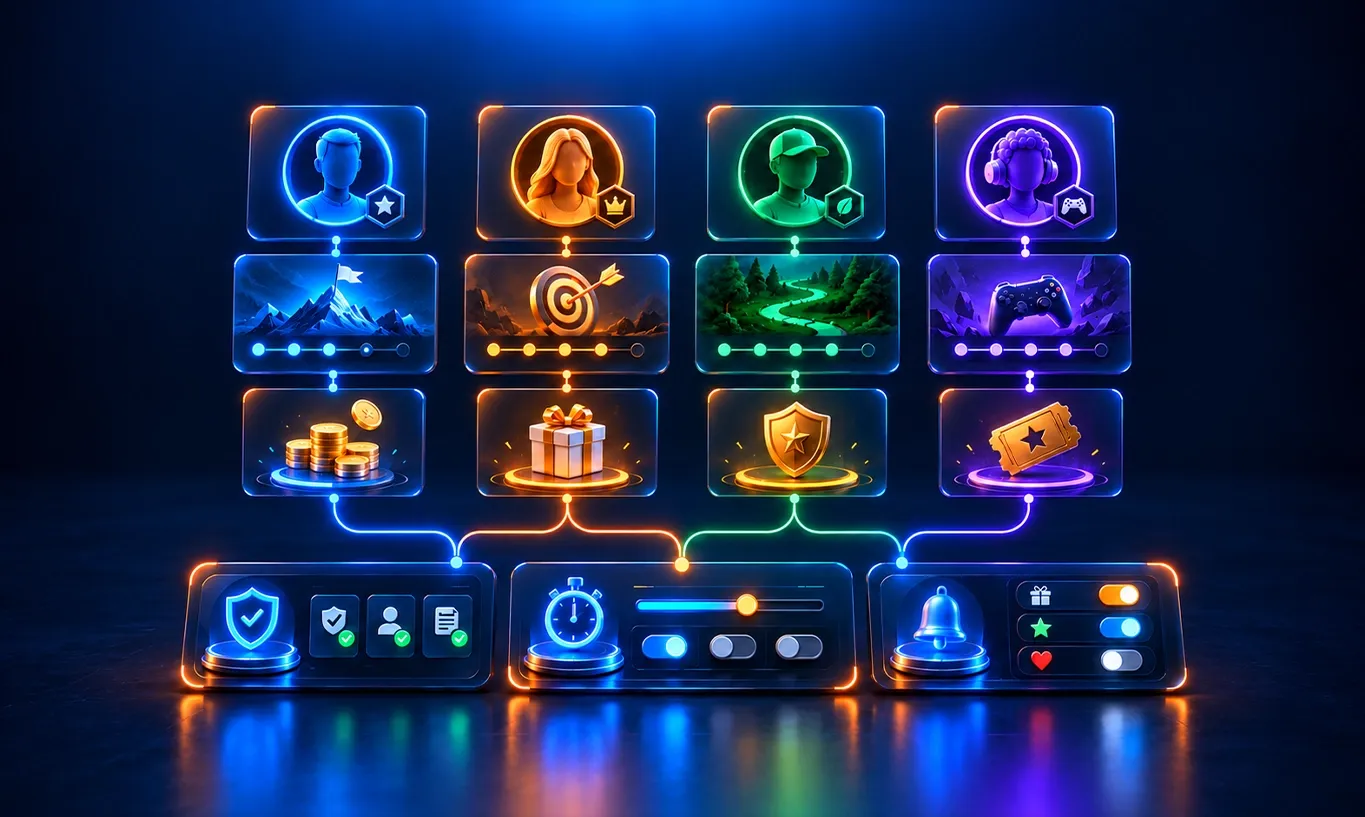
An effective iGaming loyalty program is ultimately an infrastructure problem. A mechanic may look simple to the player: complete a mission, earn XP, move up a level. Delivering it requires several systems to work together.
You will need:
● Player-level behavioural and transactional data
● Static and dynamic segmentation
● Event-based triggers
● Configurable customer journeys
● Bonus management
● Loyalty management
● Reporting and measurement
● Responsible-gaming and eligibility controls
Digitain's iGaming platform connects core products with operator tooling, while our CRM supports marketing segments, campaigns, customer journeys, gamification, bonus management and loyalty management. That integration is what turns gamification from a campaign layer into part of the player lifecycle.
CTA: Explore Digitain's iGaming Platform
SME INSERTION BEFORE PUBLICATION: Add an approved insight from a Digitain CRM/retention or product specialist here. Recommended angle: how operators decide which segments receive missions or loyalty mechanics, and how performance is measured against a control group. Do not add an unsupported performance figure.
Player Retention and Player Engagement KPIs
You should measure player retention across cohorts rather than reduced to one top-line number. For example, you could compare players exposed to a loyalty mechanic with a relevant control cohort across 7-, 30- and 90-day periods. You can then evaluate player engagement alongside the commercial results.
Did mission participation increase while NGR declined because reward cost was too high? Did reactivation improve only temporarily? Did one segment respond while another showed no incremental change?
The best loyalty systems create a feedback loop:
segment → activate → measure → learn → refine.
That is also where CRM data becomes strategically useful. Loyalty stops being a generic reward programme and turns into a measurable retention system.
CTA: Request a CRM Demo
Responsible Gamification: Where Engagement Must Stop
Gamification should never override player protection. This is the point where we have to end retail analogies. A coffee brand can encourage another store visit without confronting the same risks as a gambling operator. In regulated iGaming, loyalty mechanics must sit inside the your wider responsible gambling framework and comply with the rules applicable to each licensed market.
That means you should design gamification around clear safeguards:
● Deposit, loss, bet and time limits must take priority over promotional mechanics
● Self-excluded or otherwise restricted players must not receive inappropriate marketing
● Missions should not encourage players to chase losses
● Promotional eligibility and bonus terms should be transparent
● Behavioural risk signals should influence CRM eligibility and intervention
● Time-limited mechanics should not create inappropriate pressure to continue gambling
● Every mechanic should be reviewed against local bonus, marketing and responsible-gaming rules
This is more than a compliance layer added after product design. It is a design requirement. The same behavioural data that enables personalisation can also help identify when engagement should be reduced rather than increased. Responsible gamification therefore asks two questions simultaneously:
What experience is relevant to this player?
And:
Should we be promoting an experience to this player at all?
Sustainable loyalty requires both.
Key Takeaways for Operators
The Starbucks loyalty program case study is useful because it shows how ordinary transactions can become part of a visible, persistent value loop. Starbucks uses currency, status, progression, personalised benefits and time-limited incentives to give customers reasons to remain inside its ecosystem.
For you as an operator, the transferable principles are clear:
● Make progress visible
● Create meaningful levels rather than decorative tiers
● Connect rewards to real player segments
● Combine long-term loyalty with shorter missions
● Measure incremental commercial impact, not participation alone
● Integrate loyalty with CRM, bonus and player data
● Make responsible-gaming controls part of the mechanic itself
The goal is not gamification for its own sake. It is a loyalty environment where technology understands the player well enough to make engagement more relevant and responsible enough to know when not to engage.
CTA: Build Your Loyalty Strategy with Digitain
Frequently Asked Questions
What is gamification in marketing?
Gamification in marketing applies mechanics such as progress, levels, challenges, points and rewards to customer experiences. The objective is to make participation more visible and engaging while supporting measurable marketing outcomes.
What are the most effective player retention strategies?
Effective strategies depend on the operator and market, but commonly include behavioural segmentation, personalised lifecycle campaigns, loyalty programmes, relevant missions, responsible bonus management and continuous cohort measurement. Retention strategies should also incorporate responsible-gaming controls.
How does Starbucks Rewards work?
Under the programme introduced in March 2026, members earn Stars from eligible purchases and can redeem them for eligible rewards. Starbucks Rewards has Green, Gold and Reserve levels, with higher levels providing different earning rates and benefits. Programme terms can change, so current details should always be checked through Starbucks' official Rewards pages.
What is a gamified loyalty program?
A gamified loyalty programme combines traditional loyalty benefits with mechanics such as progression, levels, missions, achievements or time-limited challenges. Instead of only rewarding transactions, it gives members visible objectives and feedback throughout the loyalty journey.
How does gamification increase engagement?
Gamification can make goals clearer, progress more visible and rewards more relevant. Its impact should be measured rather than assumed: businesses should compare exposed cohorts with appropriate baselines or control groups to determine whether a mechanic produced incremental engagement.
Why are loyalty programs effective?
Well-designed loyalty programmes create additional value around repeat interactions. They can give customers visible progress, personalised benefits and recognition while giving businesses better opportunities to understand lifecycle behaviour and measure retention.
How can casino and sportsbook operators gamify loyalty?
Operators can use compliant loyalty levels, XP, missions, tournaments, achievements and eligible rewards integrated with CRM segmentation and player data. Every mechanic should be adapted to the applicable regulatory environment and responsible-gaming requirements.
Related Articles
How to Get a Gambling Licence: The Complete Guide (2026)
Learn how to get a gambling licence for your iGaming business. Explore licensing requirements, costs, timelines, top jurisdictions, application steps, and ongoing compliance obligations.October 23, 2026Blog
What is a Turnkey Sportsbook Solution? Costs, Features, and Launch Timelines
Learn what a turnkey sportsbook solution includes, how it works, its costs, launch timelines, licensing requirements, and key benefits for operators.October 22, 2026Blog
Turnkey Sportsbook Pricing: Costs, Fees & What to Expect
Explore turnkey sportsbook solution costs, package levels, setups, and recurring fees. Learn how to estimate total cost of ownership before launching.October 15, 2026Blog