
Omnichannel Sportsbook Solutions: What They Are and Why Operators Are Making the Switch
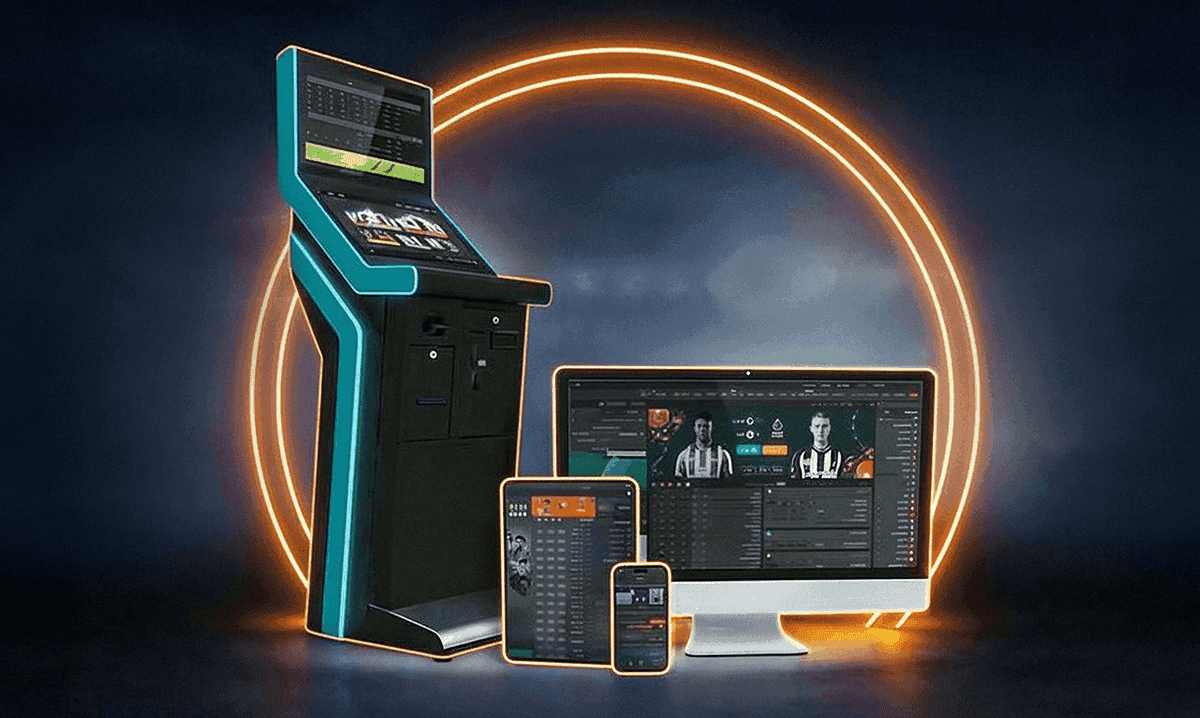
A bettor browses odds on their phone during lunch. That evening, they place a live bet on their laptop. On Saturday, they walk into a retail shop and cash out. Throughout all of this, they expect one account, one balance, and one consistent experience.
That expectation is what omnichannel sports betting is built to meet. And it’s quickly becoming the baseline for operators who want to compete in a market projected to reach USD 187 billion by 2030 (Grand View Research, 2025).
What Does Omnichannel Mean in Sports Betting?
Omnichannel is not the same as multichannel. A multichannel operator might have a website, an app, and a retail location, but each runs independently. Separate logins, separate wallets, separate promotions. Players starting a bet on mobile can’t continue it in-store.
Omnichannel connects everything through a shared backend. The result is a single, continuous player journey regardless of the channel. In practice, that means three things:
- Unified player account: One profile, one KYC verification, one betting history accessible on web, mobile, and at retail terminals.
- Single wallet: Funds deposited on a phone are instantly available at a shop kiosk. Cash out at a counter, and it reflects in the app.
- Real-time data synchronisation: Odds, results, account balances, and promotions update across every channel simultaneously. No lags, no mismatches.
Why Operators Are Moving to Omnichannel
The offline segment still accounts for a significant share of sports betting revenue globally, particularly in Europe and Australia, where traditional betting shops remain popular (Grand View Research, 2025). Meanwhile, the online segment is growing at roughly 12.9% CAGR. The opportunity is at the intersection – connecting both into a single operation.
Retention improves when the experience doesn’t break
When a player’s app doesn’t sync with their retail visit, friction builds. They might switch to a competitor whose platform feels seamless. Omnichannel removes those gaps: one journey, no restarts, fewer reasons to leave.
Cross-channel players are worth more
A player who bets online and also visits a retail location tends to have a higher lifetime value than a single-channel player. Omnichannel makes it easy for them to engage wherever they are, increasing revenue without doubling acquisition costs.
One backend means lower operating costs
Running parallel systems for web, mobile, and retail is expensive and error-prone. A unified platform means one odds engine, one CRM, one reporting dashboard. Updates push everywhere at once. Less duplication, fewer reconciliation headaches.
Complete data unlocks better decisions
When every channel feeds into one system, operators get a full picture of player behaviour. That means sharper segmentation, better-targeted promotions, and more effective risk management, decisions based on complete data rather than channel-specific fragments.
What a Solid Omnichannel Sportsbook Platform Includes
Not every platform marketed as omnichannel delivers it. Here’s what separates the real thing from a label:
- Single wallet and PAM (Player Account Management): If accounts and funds aren’t unified across channels, everything else is surface-level.
- Real-time odds engine: Live odds that update simultaneously on web, app, and retail. Players placing an in-play bet at a terminal should see the same lines as someone on their phone.
- Retail integration: POS systems, self-service betting terminals, and cashier stations connected to the same backend as digital channels.
- CRM and loyalty tools: Cross-channel player tracking, promotions, and loyalty programmes.
- Multi-channel payment support: Cards, e-wallets, bank transfers, crypto, and cash at the counter.
- Scalable architecture: Built to add new channels (wearables, voice, new terminal formats) without rebuilding the core platform.
Markets Where Omnichannel Matters Most
Latin America: Strong retail betting cultures in Brazil, Colombia, and Mexico alongside fast-growing online markets. Omnichannel bridges both segments. Operators in the region are increasingly being required to serve both online and retail under unified regulatory frameworks.
Africa: Mobile-first markets with expanding retail footprints. Many players start with USSD or SMS betting and need a pathway to richer experiences. Digitain serves 150+ betting shops internationally with retail technology.
Europe: Mature online markets where the offline segment still generates significant revenue. Cross-channel loyalty programmes and unified player data create meaningful competitive advantages.
Why Turnkey Is the Fastest Path to Omnichannel
Building an omnichannel platform from scratch requires significant time, budget, and technical resources. For most operators, a turnkey solution is the practical alternative.
A turnkey sportsbook delivers the full stack pre-integrated: sportsbook, payment gateway, CRM, retail tools, and casino module, all connected through a single backend. The omnichannel architecture is already built in. Single wallet, unified accounts, real-time sync, and cross-channel loyalty are part of the foundation, not features you bolt on later.
Turnkey gives operators their own gaming licence and the flexibility to customise branding, trading strategy, and product direction per market.
For operators targeting regions where both online and retail matter, this is especially relevant. A turnkey iGaming platform works across channels from day one, without months of custom integration to connect a retail terminal to a mobile app.
How Digitain Delivers Omnichannel
Digitain’s platform is omnichannel by design, not by add-on. The entire ecosystem runs on shared infrastructure built to work across online, mobile, and retail from day one.
The sportsbook software covers 180,000+ live events monthly across 4,000+ betting markets and 100+ sports. Players see the same odds and the same markets on their phone, desktop, or self-service terminal.
Retail and SSBTs extend that experience into physical locations. Self-Service Betting Terminals are powered by Digitain's sportsbook and virtual sports engine, with streamlined cashier operations, portable POS, and centralised admin.
Paydrom handles the payment layer: 600+ methods through 90+ providers across 6 continents, delivering a unified cashier experience across online and retail.
Virtual Sports software contributes 26,000+ daily events available across web, mobile, and retail, with cashier programme integration built in for bet shops.
CRM ties it together with real-time segmentation, automated player journeys, gamification mechanics, and integrated loyalty that tracks engagement across every touchpoint.
Native iOS and Android apps complete the ecosystem as part of the omnichannel journey.
Frequently Asked Questions
What is omnichannel in sports betting?
It means connecting all betting channels – website, mobile app, and retail locations – through one backend system. Players get a single account, single wallet, and consistent experience everywhere.
Do I need retail locations to benefit from omnichannel?
No. Omnichannel connects whatever channels you operate. If you’re online and mobile only, it unifies those. If you add retail later, the same infrastructure extends.
Can I add omnichannel capabilities to an existing platform?
It depends on your current architecture. API-based integration can work for some setups. A turnkey provider like Digitain can also offer a full platform that’s omnichannel-native from launch.
Which markets benefit most from omnichannel sportsbook solutions?
Markets with a mix of online and retail activity, particularly Latin America, Africa, and parts of Europe, see the biggest impact. But any operator with more than one channel benefits from unification.