
How to Get a Curaçao iGaming Licence
The Curaçao iGaming licence is not what it was two years ago. If you are making a licensing decision in 2026 based on what you heard about Curaçao before December 2024, you are working with outdated information.
The National Ordinance on Games of Chance (Landsverordening op de kansspelen, or LOK) came into force on 24 December 2024. It replaced the old framework entirely. The four private master licence holders who used to issue sub-licences to hundreds of operators are gone. The sub-licence model is abolished. Every operator now applies directly to the Curaçao Gaming Authority (CGA), the sole regulatory body for online gaming on the island.
The result is a materially different licensing product. Higher fees. Stricter due diligence. Real compliance obligations around AML, responsible gaming, and player fund protection. The CGA publishes mandatory refusal grounds and enforces them.
But the commercial case still holds. Curaçao's official regulatory fees are lower than Malta's. It covers multiple gaming verticals under a single B2C licence (subject to domain registration, supplier disclosure, game certification, and CGA change-control approval for each product). The June 2026 CGA Crypto Policy provides a structured framework for operators accepting virtual assets. And the licence opens access to international markets across Latin America, Africa, and Asia where it carries recognition.
This guide covers how the application actually works in 2026: eligibility, the two-phase process, official fees, supplier requirements, crypto rules, and the ongoing obligations that most guides skip over entirely.
What the LOK Changed
Before December 2024, Curaçao's online gaming industry operated under the National Ordinance on Offshore Games of Hazard (NOOGH), a law from 1993. Under that system, four entities held master licences and sold sub-licences to operators at their own discretion. Oversight was minimal. The CGA did not exist in its current form.
The Dutch government pushed for reform as a condition of pandemic-era financial support. The LOK is the result.
Direct licensing. Every operator now applies to the CGA. No intermediaries, no master licence holders, no sub-licences. The CGA issues, monitors, and can revoke licences directly.
Centralised supervision. The CGA conducts integrity checks, financial audits, and ongoing compliance monitoring. Operators submit periodic reports, incident reports, and change notifications through the CGA's online portal.
Local substance (phased). Applicants must currently be incorporated in Curaçao and have at least one resident managing director, directly or through an eligible Curaçao corporate director structure. Additional local-substance obligations under Article 5.12 LOK, including local business premises and local key persons, have been postponed until 1 April 2027. Subject to any applicable exemption, the framework then requires local premises and at least one additional full-time key person in Curaçao during the first four years after the LOK entered into force. From the fifth year, the general staffing requirement increases to at least three local key persons other than the managing director. The application of Article 5.12, including start-up exemptions and the calculation of the relevant operating period, should be confirmed with Curaçao counsel before budgeting.
Public verification. The CGA maintains a public register and digital certification system. A B2C operator's player-facing domain must display a valid Certificate of Operation Seal that links to the CGA platform and shows the exact approved domain, licence holder, and current status. A separate Licence Certificate confirms whether an entity holds a B2C or B2B licence but does not by itself authorise a particular player-facing domain. The former orange transitional seal ceased to be valid on 15 October 2025. Operators and commercial partners should verify the live certificate through the official CGA register rather than relying on a static licence count.

Licence Types
The LOK creates two primary licence categories.
B2C Online Gaming Licence. For operators offering games directly to players: online casinos, sportsbooks, lotteries, poker, and other forms of remote gambling. The LOK uses one B2C licence rather than separate casino and sportsbook licence classes. The licence may cover several approved verticals, but the operator must still register its domains, disclose suppliers, maintain an approved game inventory, and satisfy the certification and change-control requirements applying to each product.
B2B Supplier Licence. For providers of critical gaming services and goods established in Curaçao. The supplier licensing deadline is 24 December 2026, two years after the LOK entered into force.
Supplier Deadline: 24 December 2026
The CGA's June 2026 supplier announcement clarified the framework:
Curaçao-established critical suppliers must hold a CGA supplier licence and be registered with the authority by 24 December 2026. The CGA has encouraged locally established suppliers to submit licence applications by 1 September 2026 to allow sufficient review time.
Foreign critical suppliers serving CGA-licensed operators do not require a Curaçao supplier licence. They must, however, complete CGA registration before the requirement becomes enforceable. Registration for both domestic and foreign suppliers is scheduled to open in October 2026.
Non-critical suppliers. The CGA may issue a certificate valid for up to three years to providers of gaming-related services or goods not classified as critical.
The CGA currently identifies the following among the critical categories: RNG game developers, live dealer studios, poker and peer-to-peer platforms, lottery providers, sportsbook software, bet capture and settlement systems, odds compilers, and game aggregators. This list is illustrative and may be updated.
Supplier fees (from the official CGA fee schedule v2.0):
- Supplier licence application fee: €4,592 (excluding UBO and ownership-review fees)
- Non-critical supplier certificate application fee: €383
- Annual B2B supervisory fee: €24,490
Who Can Apply
According to the CGA's official licensing page, applicants must meet the following:
Curaçao legal entity. The company must be incorporated in Curaçao with its statutory seat on the island. Foreign companies cannot apply directly.
Resident director. The entity must be managed by at least one natural person who is a resident of Curaçao, or by a corporate entity established under Curaçao law that itself has at least one resident director.
UBO disclosure at 10%. All ultimate beneficial owners (UBOs) must be disclosed. Under Article 1.1 of the LOK, a UBO generally includes a natural person who directly or indirectly holds more than 10% of the shares, voting rights, or equivalent control. Additional mandatory refusal rules may apply to specified persons with larger ownership interests or policy-making influence. The CGA application page requires disclosure forms for 10%+ UBOs.
Traceable funds. The source of capital used to finance the operation must be verifiable and not linked to criminal activity.
Sufficient liquidity. The applicant must prove it has enough liquid assets to pay out expected player winnings. Ring-fencing and segregation of player funds is a licence condition from day one.
Compliance infrastructure. A responsible gaming policy must be in place before the licence is granted. The applicant must also provide a CGA-approved alternative dispute resolution (ADR) mechanism and be registered with the goAML reporting system for AML/CFT purposes.
The Two-Phase Application Process
All applications go through the CGA's online portal. Applications submitted outside the portal are not processed.
Phase 1: Integrity and Financial Stability
The CGA evaluates who owns the company, who runs it, where the money comes from, and whether the applicant has the financial resources to operate.
Phase 2: Regulatory Compliance
Once integrity clears, the focus shifts to whether the operation meets the LOK's standards for safe, responsible, transparent, and reliable gaming. This covers responsible gaming policy, AML/CFT procedures, information security, player account and fund management, ADR mechanism, and technical infrastructure.
Timeline. The CGA targets eight weeks per phase after all required documents are submitted. Each phase may be extended by up to four weeks. The regulatory review alone can therefore take approximately 16 to 24 weeks once the application is complete. Corporate setup, compliance preparation, supplier registration, and technical certification work run in parallel and may extend the overall project further. A practical end-to-end schedule should be presented as a project-specific estimate confirmed with Curaçao counsel, rather than a generic range.
Provisional licence. If an applicant clears critical requirements but does not fully meet every condition, the CGA may issue a provisional licence valid for up to six months, extendable by an additional six months. It is a conditional approval requiring the operator to resolve outstanding items within a defined window.
Definitive licence. Once all requirements are satisfied, the CGA grants a definitive licence for an indefinite duration, subject to suspension or revocation if the operator falls out of compliance.

Why Curaçao Licence Applications Are Rejected
The CGA identifies several circumstances in which it must refuse an application. These include:
- UBO identity, existence, or involvement cannot be verified
- Any key person has a criminal conviction in the past 8 years for financial crimes (theft, extortion, fraud, money laundering, terrorism financing)
- Source of funds cannot be traced or is linked to criminal activity
- Application fees are not fully paid
- Applicant has outstanding tax or social security debts
- Applicant or any policy-maker is linked to an operation whose licence has been suspended or revoked
- Insufficient liquid assets to pay expected winnings
- No responsible gaming policy in place
- No approved ADR mechanism
- A proposed key person is ineligible under the LOK's statutory Vulnerable Person criteria (a defined term under Article 1.1, covering circumstances such as bankruptcy or loss of control over property)
- Applicant is not registered with goAML
The CGA explains that the listed refusal grounds are not exhaustive. It may also refuse an application that fails to satisfy the framework's broader principles of safe, responsible, transparent, verifiable, and reliable gambling.
Official Fees
The following fees come from the CGA's official fee schedule (Version 2.0):
| Fee | Amount |
| B2C application fee | €4,592 |
| Each UBO review | €150 |
| Each qualified-interest holder review | €150 |
| Each listed UBO entity review | €2,551 |
| Annual B2C licence fee (National Treasury) | €24,490 |
| Annual B2C supervisory fee (CGA) | €22,960 |
| Total annual B2C fee | €47,450 |
| Annual B2B supervisory fee | €24,490 |
| Supplier certificate application fee | €383 |
| Additional approved domain | €250 |
| Application to add or replace an approved game | €13 per game |
Fees may be amended. Applicants should confirm the current version immediately before submission. The annual fees are invoiced separately by the CGA and the National Treasury.
Professional fees, incorporation, staffing, office setup, certification, hosting, banking, and compliance costs vary by operating model and are not included in the table above. These should be budgeted based on the operator's specific circumstances.
What Most Guides Skip: Ongoing Obligations After Approval
The CGA's Provisional Online Gaming Licence Conditions lay out specific obligations from the moment the licence is granted. The article numbers below refer to the Provisional Licence Conditions document, not to identically numbered provisions of the LOK itself.
Critical Changes Requiring Consent (Provisional Licence Condition 4)
The operator cannot make certain changes without prior CGA approval:
- Adding or changing UBOs, qualified shareholders, directors, or key persons
- Adding, removing, or changing domains
- Entering into a relationship with a new supplier (game providers, platform providers, payment processors)
- Amending the articles of association of the licence holder
Switching your game aggregator, adding a new payment provider, or bringing on a new co-founder all require CGA sign-off before the change takes effect.
Payment Transactions (Provisional Licence Condition 9)
The licence holder must maintain a separate account for player deposits and winnings. Player funds cannot sit in the operator's general operating account. All payment transactions between the operator and the player must go through the player account exclusively.
Game Certification (Provisional Licence Condition 10)
Games developed by the licensee and games supplied by third parties must be certified for soundness and integrity by a testing laboratory approved by the CGA. The CGA currently recognises technical standards from specified regulated jurisdictions, including Great Britain, Malta, Ontario, British Columbia, New Jersey, and Pennsylvania. Existing certificates and test reports may support the assessment, but the operator must still confirm that the relevant game version, laboratory, technical standard, and supporting documentation satisfy the CGA's requirements before launch.
Reporting and Data Access (Provisional Licence Condition 13)
The CGA requires multiple report types: change reports, incident reports (24-hour deadline from confirmation), player transaction reports, complaints reports, ADR reports, independent AML compliance audits (by a CGA-approved expert), and independent system audits.
The licensee must ensure that specified critical records, including player data, gaming transactions, and financial transactions, remain continuously accessible to the CGA through a server hosted in a Tier-IV-certified data centre located in Curaçao. The law does not establish a standard hosting price. Operators should obtain current quotations based on data volume, replication, security, availability, retention, audit access, and support requirements.
Crypto Rules Under the LOK and the June 2026 CGA Crypto Policy
Curaçao permits cryptocurrency within the B2C framework, but only where the operator implements the current CGA crypto, AML, and supplier-control requirements. The claim that crypto requires "no separate approval" is outdated.
In June 2026, the CGA published its first detailed crypto compliance guideline for B2C licensees, with a phased implementation timeline:
Immediate (June 2026): Sanctioned wallets and mixing services are banned. Licensees may accept crypto only as payment for gambling. They may not act as an exchange, custodian, payment service provider, or VASP.
By September 2026: Each licensee must upload a compliant crypto policy to the CGA portal.
By December 2026: Operators must complete crypto risk assessments, due diligence on any third-party VASPs, wallet ownership controls, transaction monitoring procedures, and staff training.
By June 2027: Full compliance required, including wallet segregation (player, operational, and treasury wallets kept separate), blockchain analytics, transaction reconciliation, withdrawal whitelisting, and audit-ready records.
The CGA retains the authority to demand faster compliance where it identifies material risks.
On payouts: the default expectation is that a crypto withdrawal is returned to the same verified wallet and in the same crypto asset used for the deposit. The CGA's June 2026 policy allows controlled alternatives in defined circumstances, such as a verified and whitelisted wallet belonging to the same customer, or conversion through a regulated VASP where the full flow remains transparent and auditable.
Curaçao vs Malta: A Factual Comparison
Curaçao and Malta have different cost, tax, substance, and market-access profiles. The total project cost depends on corporate setup, local substance, certification, compliance staffing, technical infrastructure, and the markets the operator intends to enter.
| Factor | Curaçao (LOK) | Malta (MGA) |
| Regulator | CGA | MGA |
| Licence structure | Single B2C licence, multiple approved verticals | Single B2C licence, four game types |
| Official application fee | €4,592 (plus UBO fees) | €5,000 |
| Official annual B2C regulatory fee | €47,450 (Treasury + CGA) | €25,000 + compliance contribution (sliding scale by GGY) |
| Local-substance requirements | Curaçao entity + resident director now; local premises + key persons from April 2027 | EU/EEA entity; demonstrable local presence expected |
| Formal processing stages | Two phases, 8 weeks each (extendable by 4 weeks each) | Multi-stage, no fixed published timeframe (typically 6-12 months) |
| Gaming tax | None | Until 30 September 2026: 5% on qualifying Malta customer revenue. From 1 October 2026: 15% for Type 1, 10% for Types 2-4 (Legal Notice 84 of 2026). MGA compliance contribution and licence fees apply separately |
| Corporate tax | 22% on profits | 35% headline (effective ~5% via refund system) |
| Supplier licensing | Curaçao-established critical suppliers: CGA licence by 24 Dec 2026. Foreign critical suppliers: CGA registration | B2B Critical Gaming Supply Licence required |
| Crypto framework | Permitted with phased CGA Crypto Policy (full compliance by June 2027) | Possible with additional VFA compliance |
| Technical certification | CGA-approved lab; recognises standards from GB, Malta, Ontario, BC, NJ, PA | MGA-approved auditor; ISO/IEC 27001 hosting in EU/EEA |
| Target-market legal assessment | Required separately for each jurisdiction the operator intends to serve | Required separately for each jurisdiction |
Professional fees, incorporation, staffing, office, certification, hosting, banking, and compliance costs vary by operating model and are not included unless expressly stated. Market access must be assessed separately under the laws of each target jurisdiction.
[INTERNAL LINK] Link to How to Get an MGA Licence from the comparison table.
Getting the Technical Stack Right
A licence is a legal permission to operate. It is not a platform, a game library, or a payment system. The CGA requires that all gaming equipment and application software be tested by a CGA-approved laboratory, and that games meet the certification standards the CGA recognises.
A platform partner with established technical documentation, testing evidence, and regulated-market experience can reduce implementation and evidence-gathering work. The licence applicant remains responsible for demonstrating that its specific platform configuration, suppliers, games, payment flows, data environment, and operating procedures meet CGA requirements.
Digitain's casino aggregation technology provides access to a broad portfolio of third-party games through a single API, while Paydrom connects the platform to more than 600 global and local payment methods. The content, payment methods, and currencies available to a Curaçao-licensed operator remain subject to supplier registration, technical certification, market rules, and product confirmation.
Digitain holds licences and certifications across multiple regulated jurisdictions, including Malta (MGA), the UK (UKGC), Romania, Greece, Belgium, Peru, Brazil, and Curaçao. You can see the full list on our licences and certifications page. If you are going through the Curaçao licensing process and want to map the platform components, supplier registrations, game-certification evidence, payment integrations, and data-access requirements relevant to your application, talk to our team.
This article is for informational purposes only and does not constitute legal advice. Licensing requirements, fees, and regulations are subject to change. Always consult qualified legal counsel and verify current requirements directly with the Curaçao Gaming Authority before making licensing decisions.
Frequently Asked Questions
What is the LOK?
The LOK (Landsverordening op de kansspelen) is the National Ordinance on Games of Chance that governs all online gambling in or from Curaçao. It came into force on 24 December 2024, replacing the NOOGH framework. It established the CGA as the sole licensing and supervisory authority and abolished the master/sub-licence system.
How much does a Curaçao iGaming licence cost?
The official CGA application fee is €4,592, plus €150 per UBO and €2,551 per listed UBO entity. The annual B2C licence fee is €47,450 (€24,490 Treasury + €22,960 CGA supervisory). Professional fees, incorporation, staffing, and compliance costs vary by operating model and should be budgeted separately.
How long does it take to get a Curaçao licence?
The CGA targets eight weeks per phase (two phases), extendable by four weeks each. The regulatory review alone can take approximately 16 to 24 weeks once the application is complete. Corporate setup, compliance preparation, and technical work run in parallel and may extend the overall project further.
Can I operate a crypto casino with a Curaçao licence?
Crypto is permitted within the B2C framework, subject to the CGA's June 2026 Crypto Policy. Operators must implement phased requirements including a compliant crypto policy (by September 2026), risk assessments and VASP due diligence (by December 2026), and full wallet segregation and blockchain analytics (by June 2027). Operators may not act as exchanges or VASPs.
What happens if my application is rejected?
The applicant can file an objection with the CGA or appeal to the Court of First Instance of Curaçao. Both must generally be filed within six weeks of the decision. The CGA advises seeking legal counsel.
Do I need a physical office in Curaçao?
A Curaçao legal entity and an eligible resident managing director are required for the application. The additional local-substance obligation, including local business premises under Article 5.12 LOK, has been postponed until 1 April 2027. Operators should budget and plan for future staffing and premises requirements, subject to any applicable exemption.
Is an old Curaçao sub-licence still sufficient?
No. The former master-licence and sub-licence model no longer provides current authorisation on its own. The temporary orange certificate ceased to be valid on 15 October 2025. A current operator should be verified through the CGA register and the certificate linked to its exact player-facing domain.
Do my suppliers need to be licensed or registered?
Curaçao-established critical suppliers must hold a CGA supplier licence by 24 December 2026. Foreign critical suppliers do not require a Curaçao licence but must complete CGA registration. Registration is scheduled to open in October 2026. The CGA currently classifies sportsbook software, odds services, bet capture and settlement, RNG games, live studios, and game aggregation among the critical categories.
Related Articles

Player Retention Strategies for Online Casinos and Sportsbooks
Player retention strategies for online casinos and sportsbooks. CRM triggers, loyalty design, payment speed, responsible gambling, and churn prevention.October 9, 2026Blog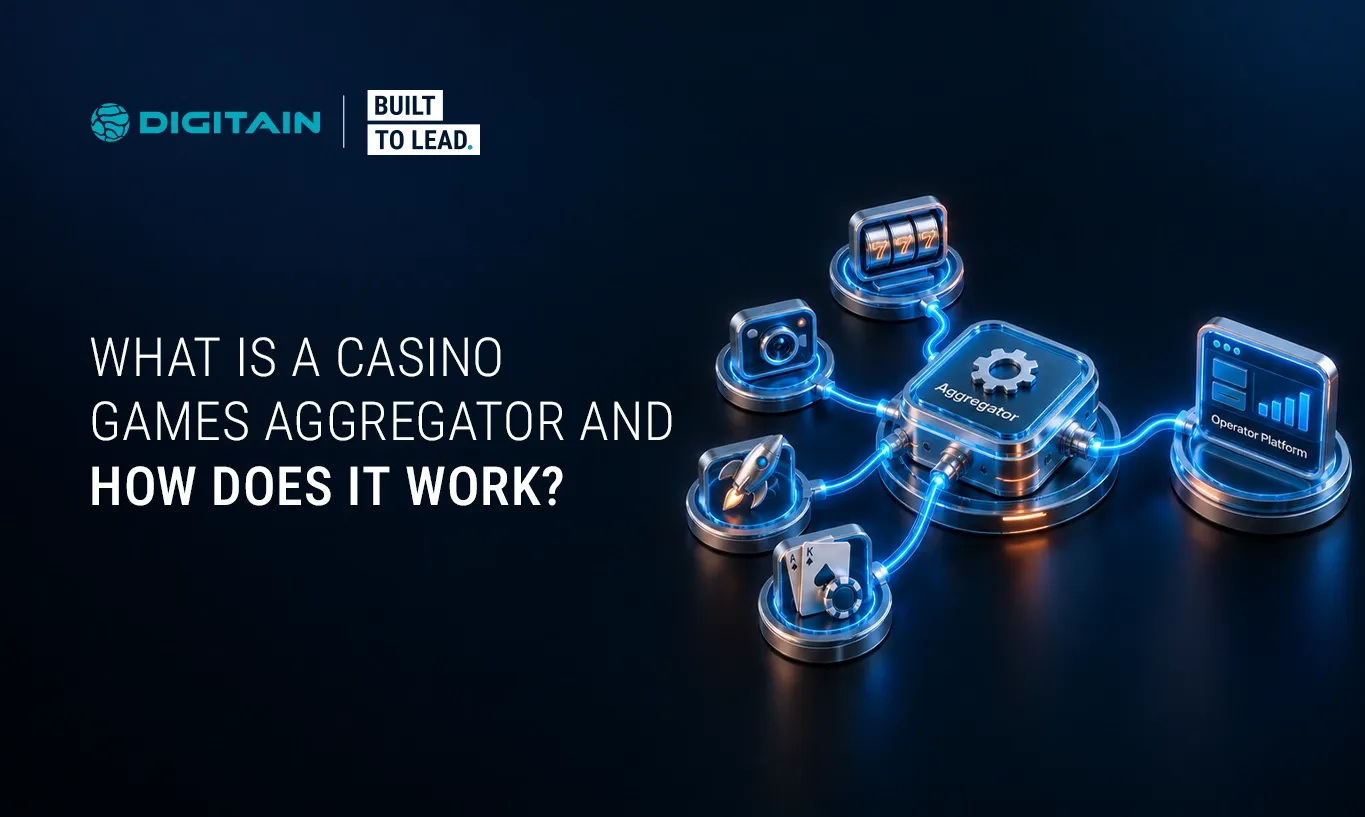
What Is a Casino Games Aggregator and How Does It Work?
What is a casino games aggregator? How it connects operators to hundreds of game providers through a single API, and why most online casinos use one.October 9, 2026Blog
How RTP Configuration Affects Casino Lobby Economics
What is RTP in casino games? Learn how RTP affects slots, volatility, payouts, and casino economics for both players and operators.October 1, 2026Blog